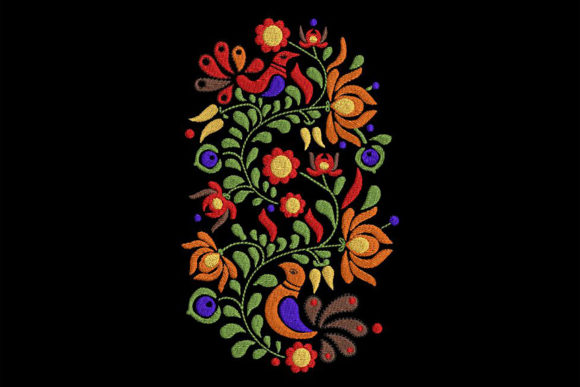
Hungarian Color-rich Traditional Motif Review
As I set up my craft fair booth this weekend, the table is a chaotic mix of finished goods and half-finished samples. Tote bags hang from hooks, aprons are folded neatly beside stacks of tea towels, and caps sit in a pyramid formation. In this environment, where every inch of visual space competes for attention, I am reviewing a specific machine embroidery design to see if it belongs on my best-sellers list: the Hungarian Color-rich Traditional Motif. This piece is not just another digital file; it carries the weight of history and the vibrancy of Europe. Traditionally embroidered by hand, was a labor-intensive design that took generations to perfect. Now, as a modern maker, I need to determine if this seven-color wonder translates effectively into a profitable craft fair product.
First Impressions: Bold, Rustic, and Timeless
The moment I load the embroidery file onto my machine, the aesthetic impact is undeniable. The Hungarian Color-rich Traditional Motif feels bold, rustic, and deeply decorative. It does not whisper; it announces itself. Unlike minimal designs that require close inspection, this motif grabs the eye from across the room. It possesses an elegance that feels premium yet accessible, avoiding the trap of looking too "farmhouse" or overly kitschy. Instead, it strikes a balance between festive celebration and soft, traditional charm. For a handmade product line, this design signals quality. Customers walking past my booth will immediately recognize the intricate detail, associating the complexity with high value.
The description notes that it has 7 colors, you can choose your preferred colors, I used the colors seen in the worksheet f. This flexibility is a massive selling point. While the traditional palette offers authenticity, the ability to customize allows me to adapt the design for different seasons or target audiences. However, the sheer density of the pattern means that thread contrast is critical. If I were to use muted tones on a dark fabric, the magic would be lost. The visual appeal relies heavily on the vibrancy of the thread colors popping against the background material.
Product Performance: Where Does It Shine?
When considering which items to produce for the weekend market, the scale and placement of the Hungarian Color-rich Traditional Motif become the deciding factors. This is not a design meant for tiny accents on cufflinks or small patches on denim jackets. It demands space to breathe.
- Tote Bag Design: A large tote bag is the ideal canvas. Placing the motif centrally on a natural cotton canvas allows the seven colors to stand out without competition. It transforms a utility item into a statement piece.
- Apron Embroidery: An apron offers a vertical surface perfect for this traditional look. Positioning the design on the bib creates a focal point that draws the customer's gaze upward, making the apron embroidery feel like wearable art.
- Tea Towel Embroidery: Kitchen textiles are a staple for craft fairs. The texture of a linen or heavy cotton towel complements the rustic nature of the motif. However, one must be careful with the loop pile of some towels, as it can interfere with the stitch definition.
- Pillow Covers: These are excellent for home decor buyers. The flat surface ensures the design lays perfectly, showcasing the intricate details of the commercial embroidery work.
- Embroidered Patch: While possible, the patch application requires caution. Because the original design was labor-intensive by hand, the digitized version retains complex curves. On a patch, these might lose clarity if the backing is too thick or the size is reduced too much.
For the Etsy seller or boutique owner, this design elevates the perceived value of the item. A simple white pillow cover becomes a luxury home accent when adorned with the Hungarian Color-rich Traditional Motif. It tells a story of heritage and craftsmanship, which is exactly what buyers seek in the handmade market.
Production Realities: Density, Texture, and Scale
While the visual potential is high, the practical execution requires a seasoned eye. The fact that it was traditionally a labor-intensive design implies a high stitch count and significant density. When producing batch orders for a small shop product line, efficiency matters. I must ensure the stitch density is optimized so the machine does not jam or pull the fabric excessively.
One major consideration is the hoop size. This motif is likely too large for a standard 4x4 hoop. Attempting to fit it into a smaller frame could distort the proportions of the floral or geometric elements typical of Hungarian patterns. Before committing to production runs, I will test the design on scrap fabric to confirm the required hoop dimensions. If the design is split into sections, the alignment must be flawless to maintain the integrity of the pattern.
Fabric texture plays a crucial role here. On smooth cottons, the finished product will look crisp. On textured fabrics like burlap or heavy waffle weave, the tiny details inherent in the seven-color scheme might get lost in the fabric's grain. Similarly, curved surfaces like caps present a challenge. The rigid structure of a cap can cause puckering if the stabilizer choice is incorrect. For dark fabrics, the bright colors of the motif will shine, but a cutaway stabilizer is non-negotiable to prevent sinking stitches.
Careful-Use Notes for Makers
There are specific scenarios where this design might struggle. Small lettering integrated into the border, if any, may disappear at reduced sizes. Thick fabrics can hide the depth of the stitching, making the design look flat rather than dimensional. Furthermore, because the design relies on color blocking, using low-quality threads can result in a muddy appearance. Always use high-grade polyester or rayon threads to ensure the vibrancy matches the promise of the digital embroidery file.
Selling Strategy: From Booth to Online Listing
In a physical booth setting, the Hungarian Color-rich Traditional Motif acts as a magnet. Its complexity invites customers to lean in and touch the texture of the embroidery. This tactile engagement is vital for sales. To maximize this, I will create at least one real mockup of each product type—tote, apron, and towel—to display prominently. Showing the back of the work can also demonstrate the quality of the design assets and the care taken in production.
For online sales, photography is key. The seven colors need to be captured accurately. A printable mockup can help visualize the design on various backgrounds before investing in inventory. When listing on Etsy or a personal website, emphasizing the "traditionally embroidered by hand" heritage adds a narrative layer that justifies a higher price point. Buyers are not just purchasing a pattern; they are buying a piece of cultural history adapted for modern life.
Final Designer Checklist
Before I finalize my order for the weekend fair, I run through my mental checklist. First, I will review the spacing to ensure the design does not crowd the edges of the fabric. Second, I will confirm the commercial licensing terms. Just because I have the file does not mean I can sell unlimited products without restriction. Third, I will compare fabric colors against the thread palette to ensure maximum contrast. Finally, I will inspect the stitch density on a test swatch to guarantee the machine embroidery design pulls cleanly without tearing the fabric.
The Hungarian Color-rich Traditional Motif is a powerhouse for the creative entrepreneur who understands how to leverage tradition in a modern market. It is bold enough to stop a shopper in their tracks and detailed enough to keep them looking. By respecting its complexity and choosing the right applications, this design can become the cornerstone of a successful handmade product collection.